
A phone number can be more than a simple way to make calls or send messages. In today’s connected environment, people often use the same number for communication, account registration, business contacts, and social networking. Because of this connection between phone numbers and online identities, someone may sometimes want to know whether a particular number is associated with a Facebook presence.
This is where a Facebook reverse phone lookup can become useful. Instead of starting with a person’s name and searching through countless profiles, a reverse lookup begins with a phone number and looks for possible social profile connections through available and permitted sources.
The idea sounds straightforward, but finding a Facebook profile from a phone number is not always guaranteed. Facebook privacy controls, account settings, regional differences, number changes, and the availability of online information can all affect what a search reveals.
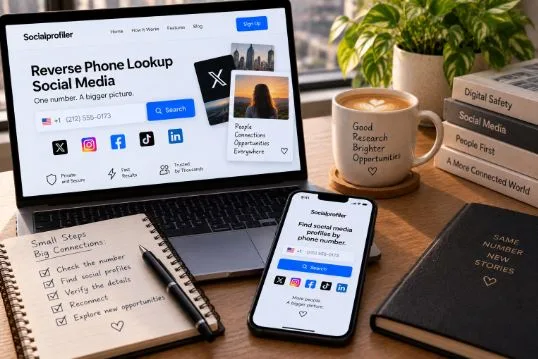
Services such as Socialprofiler provide a dedicated way to explore potential social profile connections from a phone number. Its described workflow is designed around social identities rather than simply providing traditional telephone-line information. Like any lookup method, the results should be treated as potential leads and evaluated carefully.
Starting With a Phone Number
Traditional online searches usually begin with information such as a person’s name, username, company, or email address. A phone-based search takes a different approach.
When a user has a legitimate reason to investigate a number, the number itself can serve as the starting point for discovering possible online connections. This can be useful when a person’s exact name or username is unknown.
For example, someone may have an old contact saved without a name, receive communication from an unfamiliar number, or want to review what social information is associated with their own phone number.
A Facebook reverse phone lookup follows this basic concept. Instead of asking the user to identify the account first, the phone number becomes the initial search input.
However, a phone number should not automatically be treated as proof of a person’s identity. Numbers can be shared, reassigned, used by businesses, or associated with outdated online information.
Why Phone-Based Discovery Can Be Useful
Phone numbers can be useful search identifiers because they are often connected with account registration, verification, communication, and recovery systems.
This can make phone-based discovery useful in several legitimate situations. Someone trying to reconnect with a former colleague may have a phone number but no longer remember the person’s exact Facebook name. A business owner may want to review whether a public contact number is connected with a social presence. Someone conducting a personal digital-footprint check may also want to understand what online information could be associated with their own number.
The important point is that phone-based discovery is a search method, not a guarantee of identification.
How Socialprofiler’s Search Works
Socialprofiler is designed to make social profile discovery from a phone number more structured.
For its described US-number workflow, the user enters a complete 10-digit US phone number as the starting input. The search does not initially require a person’s name, email address, username, social handle, or direct profile link.
Once the number is submitted, Socialprofiler checks multiple permitted sources for signals that may connect the number with social profiles on supported networks. These include Facebook, Instagram, TikTok, and X.
This multi-network approach is important because the person being searched may not have a discoverable Facebook connection but may have an available profile signal on another supported network.
The service is therefore focused on exploring possible social identities rather than simply returning telephone information such as a carrier or subscriber record.
Understanding the Free Preview
When Socialprofiler identifies a possible social profile connection, its described process provides a free preview.
The preview can show a related profile photo and indicate the social network where the possible match was found. This provides an initial way to judge whether the result appears relevant.
Certain identifying information remains blurred during the preview. The person’s name, username or handle, and direct profile link are not revealed at this stage.
This preview-first approach gives users an opportunity to assess the available information before deciding whether they want to access the paid result.
If several potential profiles are displayed, each profile should be assessed separately. The fact that multiple accounts appear in connection with one phone-number search does not automatically mean that all of them belong to the same individual.
What the Paid Result Can Reveal
If a user chooses to continue, the paid result can reveal available names, usernames, handles, and direct profile links associated with a potential match.
For someone conducting a Facebook reverse phone lookup, these details can provide additional context when reviewing a possible profile.
The paid result also provides access to a Socialprofiler report when sufficient information is available. Rather than limiting the search to a basic account reference, the report can organize available social activity into several sections.
This can make it easier to understand the information associated with a potential matched profile.
At the same time, users should remember that the availability of information depends on the data accessible to the service. A paid result should not be interpreted as a guarantee that every account, detail, or historical connection has been identified.
Socialprofiler’s Broader Social Report
The Socialprofiler report can include several types of information based on available social media activity.
One section is Top Interests, which can organize interests indicated by the available activity.
The report may also include Red Flags across categories such as drugs, alcohol, weapons, mature content, and esoteric interests.
These categories need to be interpreted cautiously. They represent information or signals identified from available social activity and should not automatically be treated as verified conclusions about a person’s behavior or character.
Another section can include Friends, showing information about mutual followers. This may provide useful context around a potential social profile, although a mutual follower does not by itself establish a personal relationship.
Executive Summary
Socialprofiler also describes an Executive Summary for available matched-person information.
Depending on the information available, the summary may cover areas such as profession, location, political views, family details, financial status, and unusual aspects.
Because some of these categories can involve personal or sensitive information, context is especially important.
Online information may be incomplete, outdated, or presented without the surrounding circumstances. A summary should therefore be treated as an organized presentation of available information rather than a complete, independently verified biography.
Users should verify important claims through appropriate public sources before relying on them.
AI Assistant for Exploring the Report
Another feature described by Socialprofiler is an AI Assistant.
The assistant can answer questions about the matched person using information available in the Socialprofiler report. This can provide a more convenient way to explore a large amount of information without manually reviewing every section.
For example, instead of scanning an entire report, a user can ask a question related to information contained in the available profile data.
The AI Assistant does not represent the actual person being searched. Its responses are generated from available information, so they should not be interpreted as direct statements from that individual or as guaranteed facts.
Conversation Simulator
Socialprofiler also describes a “talk to the person” simulator.
This feature allows users to practice a possible conversation without actually contacting the person. Someone who is reconnecting with an old contact, for example, may want to think through possible ways of starting a conversation.
The simulator is a practice tool rather than a representation of the real person’s thoughts or guaranteed responses. Users should therefore treat its output as simulated conversation rather than evidence about what the person would actually say.
Understanding Facebook Privacy Settings
One of the biggest factors affecting a Facebook reverse phone lookup is privacy.
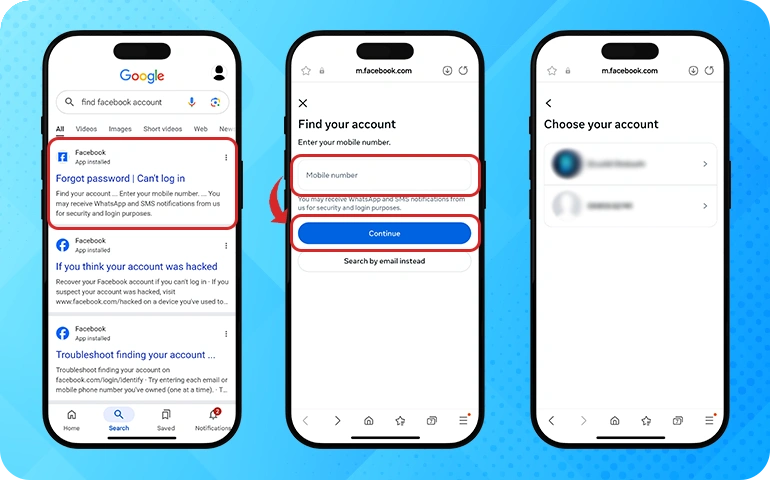
A Facebook user may control how their account can be discovered through contact information. Having a phone number associated with an account does not necessarily mean that anyone with the number can locate the profile.
As a result, entering a phone number does not guarantee that a Facebook profile will appear.
A failed search may mean that the number is not associated with a Facebook account, that another number is being used, that the number was removed, that privacy settings limit discovery, or that sufficient information is simply unavailable.
When a Search Produces No Result
A failed lookup should not automatically be interpreted as evidence that a person has no Facebook account.
There are many possible explanations for an empty result. The account may have been registered with another phone number or email address. The number may no longer be associated with the account. Privacy settings may limit discoverability.
The information available to a lookup service may also be incomplete.
Understanding these limitations prevents users from turning the absence of a result into an unsupported conclusion.
Avoiding False Matches
False matches are another important consideration.
Suppose a phone number produces a Facebook profile with a familiar name. That does not automatically establish that the profile belongs to the person you have in mind.
Names can be shared by many people. Profile photographs can be similar or reused. Online information can also remain visible after it has become outdated.
A better approach is to compare several legitimate, publicly available indicators. A profile name, public photograph, username, general location, business affiliation, or other visible information may provide additional context.
Even when several details appear consistent, users should recognize that automated search results are still potential matches rather than absolute proof of identity.
Phone Numbers Can Change Ownership
One of the most overlooked issues in phone-based searching is number reassignment.
Mobile and telephone numbers do not necessarily remain with one person forever. A number that belonged to one individual several years ago may eventually be assigned to another customer.
Older websites, directories, advertisements, or social references may continue to contain the original number.
This can create confusing search results. If information from different periods appears in the same search, consider whether the number may have changed owners.
Historical references should not automatically be treated as information about the current number holder.
Personal and Business Numbers
A phone number may belong to a business rather than an individual.
Companies can publish customer-service numbers, office lines, sales numbers, appointment lines, and virtual phone numbers. Several employees may have access to the same contact number.
If a lookup connects such a number with a Facebook page or other social presence, the result may represent a business rather than a particular employee.
Understanding the context of the number is therefore important before interpreting a potential profile connection.
Using Reverse Lookup for Your Own Digital Footprint
A Facebook reverse phone lookup can also be useful as a personal privacy exercise.
Instead of searching for someone else, you can examine your own phone number and see what publicly available social information may be connected with it.
This can help reveal old business listings, forgotten social accounts, outdated contact details, or other public references.
Once you understand what information may be associated with your number, you can review privacy settings and remove or update outdated information where appropriate.
The goal of this type of search is greater awareness of your digital footprint.
Responsible Searching Matters
Any technology capable of connecting phone numbers with online profiles should be used responsibly.
Legitimate purposes may include reconnecting with a known contact, reviewing a public business presence, checking your own digital footprint, or exploring information that you are otherwise authorized to research.
The same technology should not be used to harass, threaten, impersonate, monitor, or expose another person.
Privacy should remain central to the process. If an individual has deliberately restricted their profile or contact information, attempting to bypass those controls is not an appropriate use of a lookup service.
Making Sense of Search Results
A useful lookup is not necessarily the one that produces the most information. Relevance, context, and accuracy matter more than volume.
When reviewing a Facebook reverse phone lookup, consider where the information came from, whether it appears current, and whether several legitimate public details support the same possible connection.
Socialprofiler can organize potential social information, but human review remains important.
Automated systems can identify possible signals. Users still need to consider whether those signals make sense within the legitimate purpose of their search.
Looking Beyond Facebook
Facebook is only one part of the modern social media landscape.
Because Socialprofiler’s described workflow checks supported networks including Facebook, Instagram, TikTok, and X, a phone-number search may reveal a possible social connection on a different platform even when a Facebook result is not available.
This can be useful when the user’s original question concerns social identity more generally.
However, results from different networks should not automatically be combined into one confirmed identity. Each possible profile should be assessed independently and in context.
A Practical Search Process
If you want to conduct a Facebook reverse phone lookup through Socialprofiler, begin with an accurate complete 10-digit US phone number.
The number is the initial search input, so you do not need to start with a name, email address, username, social handle, or direct profile link.
After submitting the number, review any available free preview. Look at the profile photo and the network identified by the service. If multiple possible profiles appear, consider each one separately.
If you choose to access the paid result, available names, usernames, handles, and direct profile links can provide additional context. The Socialprofiler report may also organize available social activity into areas such as Top Interests, Red Flags, Friends with mutual followers, and an Executive Summary.
The AI Assistant can help explore information contained in the report, while the conversation simulator can provide a way to practice a possible conversation without contacting the person.
Throughout the process, treat the results as potential leads and verify important information where appropriate.
Why Human Review Still Matters
Technology can make online research faster, but it cannot eliminate ambiguity.
Phone numbers can change ownership. People can share numbers. Social profiles can be renamed or deleted. Information can become outdated. Similar names and photographs can also create false matches.
These factors mean that automated results require context.
A responsible user does not simply accept the first profile returned by a search. Instead, they examine the available information, consider alternative explanations, and recognize uncertainty when the evidence is insufficient.
Final Thoughts
A Facebook reverse phone lookup offers a different way to approach online profile discovery by starting with a phone number instead of a name or username.
In suitable circumstances, this approach can help users explore possible social connections, reconnect with known contacts, review public business information, or understand their own digital footprint.
Socialprofiler provides a structured process in which a complete 10-digit US phone number can be used as the starting input. The service checks multiple permitted sources for possible connections with supported social networks, including Facebook, Instagram, TikTok, and X.
When a possible match is found, the free preview can show a related profile photo and the network where the match was found, while names, usernames or handles, and direct profile links remain blurred. The paid result can reveal available identifying profile details and provide access to the broader Socialprofiler report.
The report may include Top Interests, Red Flags across specified categories, Friends showing mutual followers, and an Executive Summary. Socialprofiler also describes an AI Assistant for exploring report information and a “talk to the person” simulator for practicing a possible conversation without contacting the actual person.
These features can make social profile research more organized, but they do not guarantee complete information or definitive identity verification. Privacy settings, number reassignment, shared numbers, outdated data, and false matches can all affect results.
The most responsible approach is to use an accurate number, evaluate each potential match independently, rely on legitimate information, verify important details, and respect privacy controls. Used thoughtfully, a phone number can serve as a useful starting point for exploring online social connections without turning an automated result into an unsupported conclusion.